
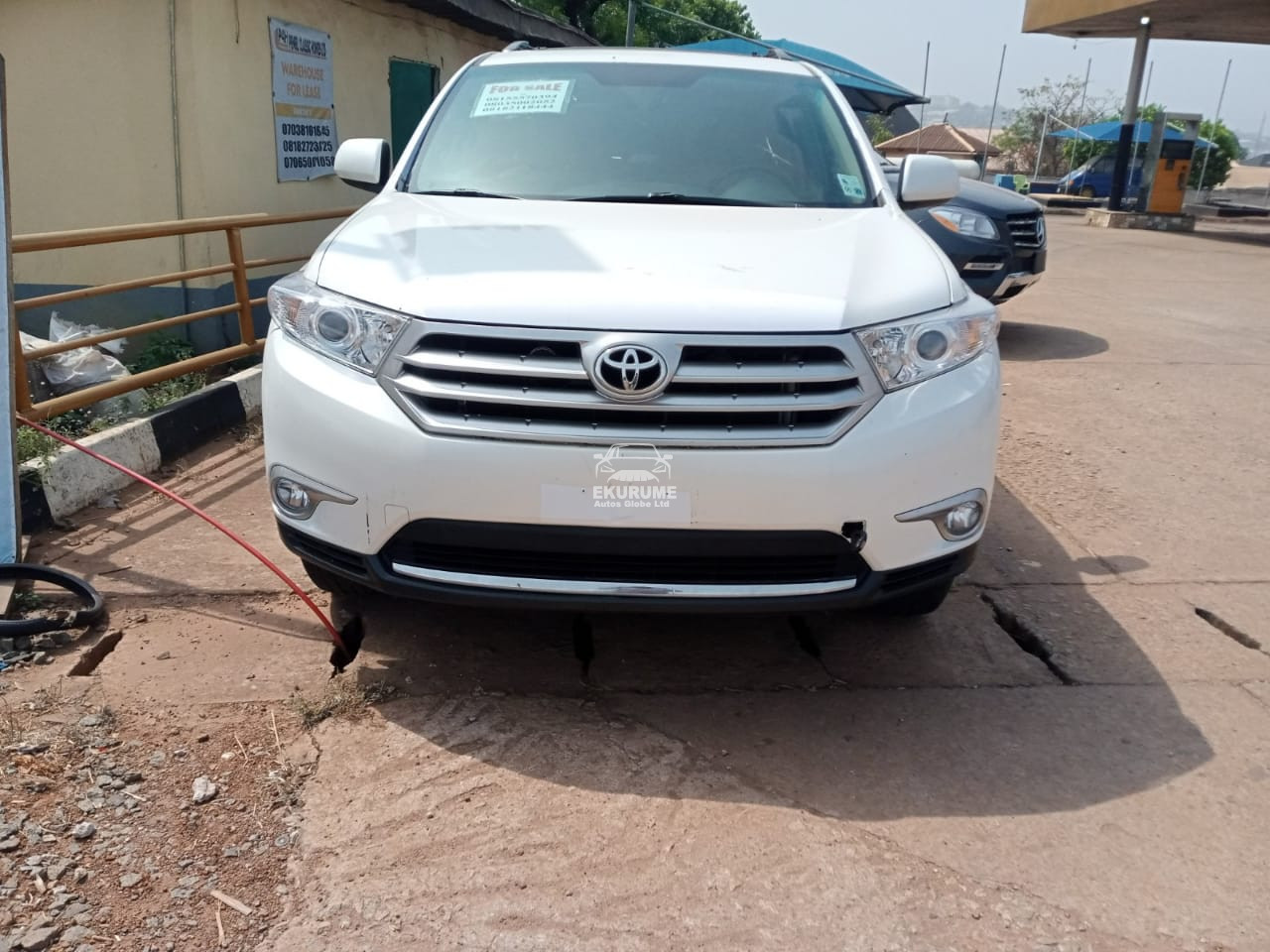


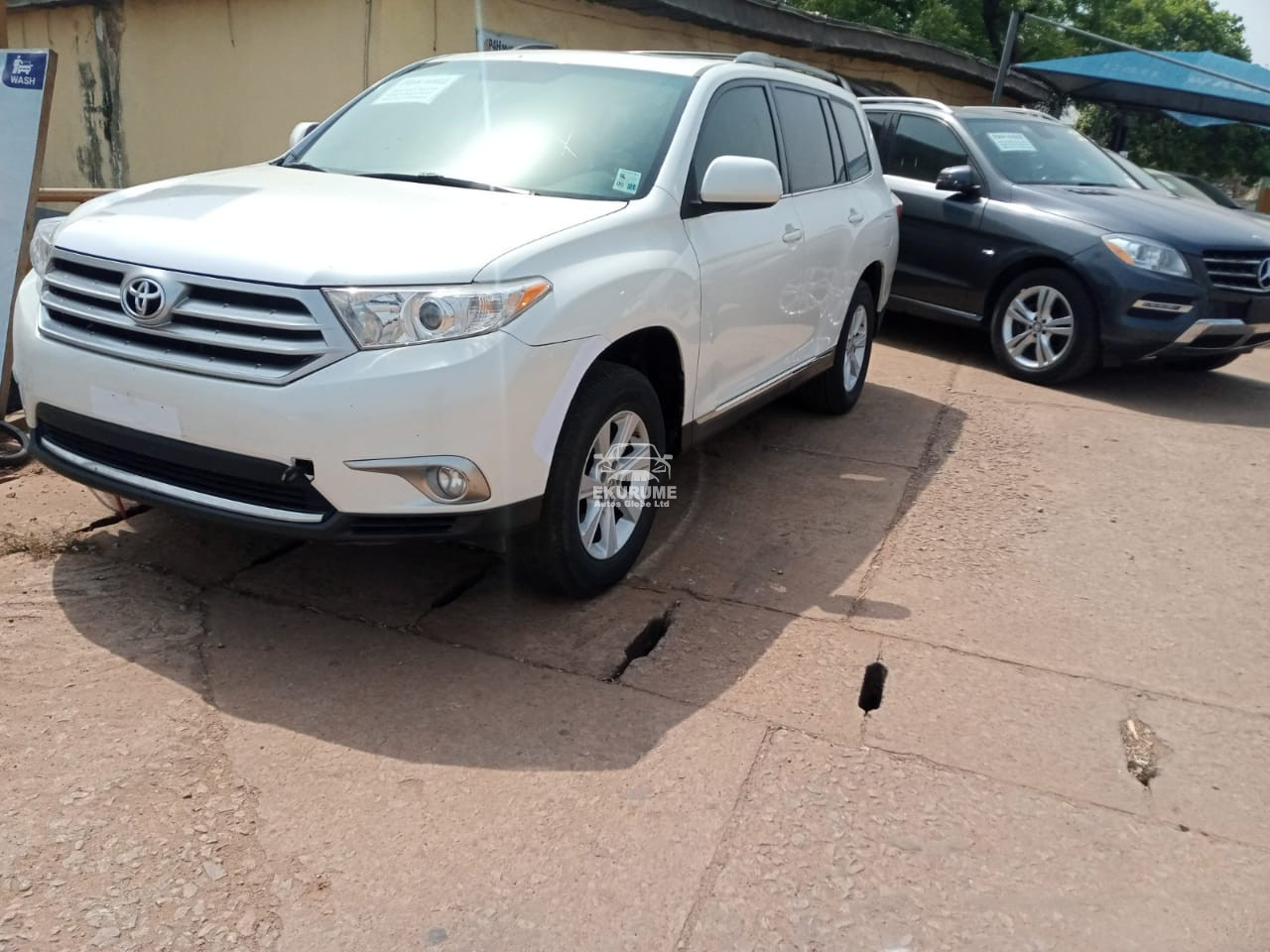

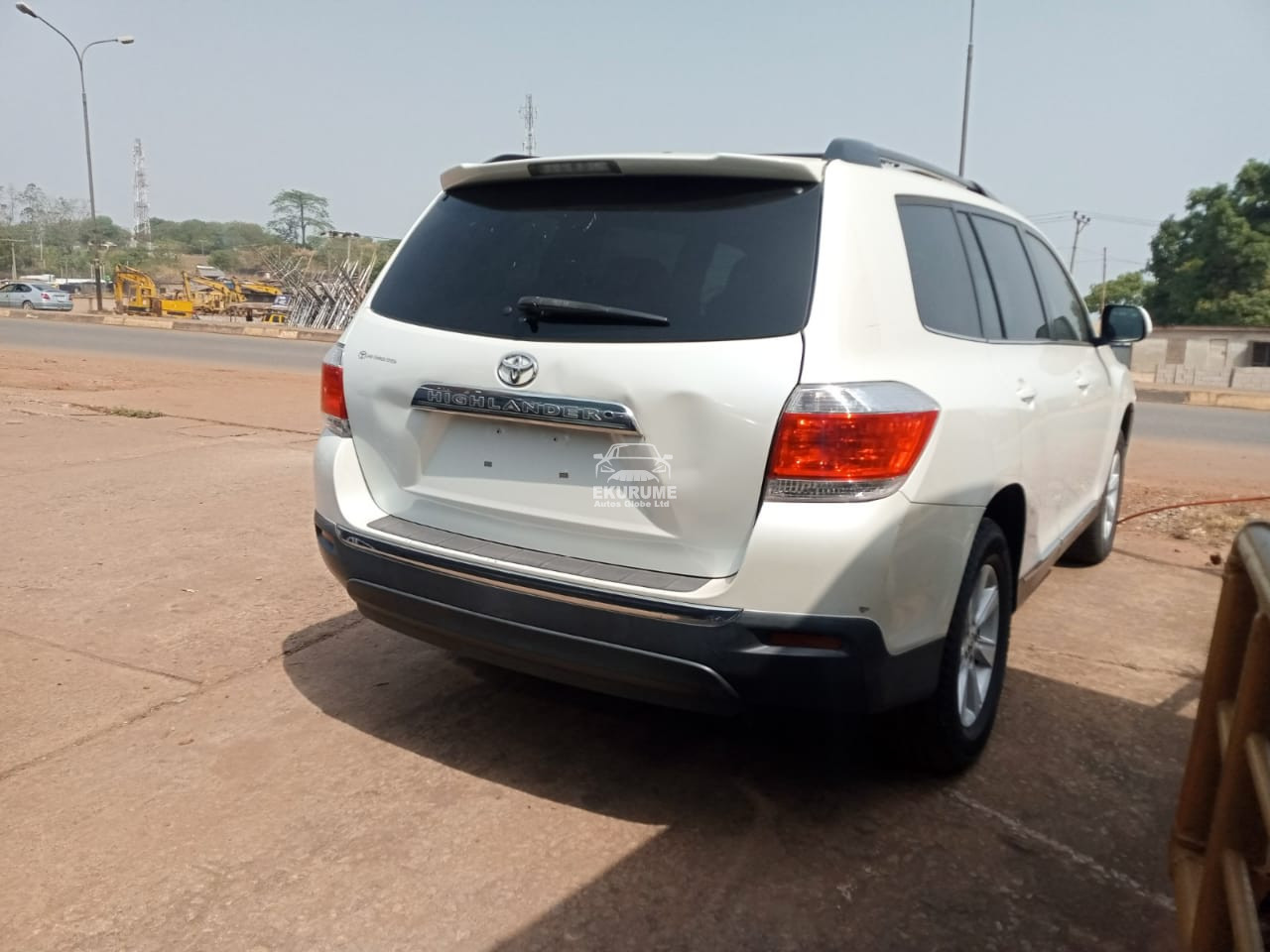


Crossover SUVs like the 2012 Toyota Highlander owe their appeal to the canny mix of traits they present. The best of the bunch handle like cars while delivering the family-friendly features and boundless utility that made their truck-based SUV forebears such hot tickets back in the day.
In many respects, the Highlander gets this formula just right. It feels spry on the road and is easy to drive, with especially brisk acceleration from the V6 engine. On hand are all the amenities you’d expect from a solid family hauler, starting with a quiet, roomy cabin that seats up to seven passengers. While the Highlander’s third row is less spacious than that of some rivals, it’s easy to reach thanks to a nifty 40/20/40-split second row with a removable center seat that facilitates walk-through access. This crossover also has fuel efficiency to its credit, with both the inline-4 and V6 delivering impressive mileage.
Performance & mpg
The 2012 Toyota Highlander is available with a choice of two engines. The base model can be had with a 2.7-liter inline-4 engine that puts out 187 horsepower and 186 pound-feet of torque. Power is sent to the front wheels through a six-speed automatic transmission. EPA fuel economy estimates are 20 mpg city/25 mpg highway and 22 mpg combined.
Optional for the base and SE and standard for the Highlander Limited is a 3.5-liter V6 that’s rated at 270 hp and 248 lb-ft of torque. A five-speed automatic and front-wheel drive are standard; all-wheel drive is optional. A Highlander Limited AWD tested by Edmunds sprinted from zero to 60 mph in just 7.5 seconds, which makes it one of the quicker crossovers on the road. With front-wheel drive, the Highlander V6 returns EPA estimates of 18 city/24 highway/20 combined; adding all-wheel drive drops these numbers to 17/22/19. Properly equipped, a Highlander V6 can tow up to 5,000 pounds.
Safety
The Highlander comes standard with antilock disc brakes, stability and traction control, side-impact airbags for front seat passengers, full-length side curtain airbags, a driver-side knee airbag and active front head restraints. Hill-start assist is also standard. All-wheel-drive models also gain hill-descent control.
In government crash tests, the Highlander earned an overall rating of four stars (out of a possible five), with four stars for frontal crash protection and five stars for side-impact protection. In tests conducted by the Insurance Institute for Highway Safety, the Highlander received “Good” ratings (the highest possible) in both frontal-offset and side impact tests.
Driving
When it comes to driving dynamics, the 2012 Toyota Highlander is one of the more well-rounded choices in its segment. You get decent handling from the fully independent suspension, and the ride quality is surprisingly smooth. Being a bit smaller than other larger crossovers, the Highlander is easier to maneuver, particularly in tight parking lots. The light-effort steering also helps here, though it is rather numb and uninspiring compared to some of its rivals.
The Highlander grows even more appealing with the 3.5-liter V6, thanks to that engine’s strong acceleration; the V6 moves the 4,000-pound crossover with a briskness that makes this Toyota seem smaller than it is. The fact that this powertrain is also among the most fuel-efficient in the category is an added bonus. The four-cylinder engine gets slightly better fuel economy, but we wouldn’t recommend it for anybody except the most frugal-minded, given the sacrifice made in terms of performance.
Interior
The 2012 Toyota Highlander features one of the better-looking cabins in the segment, and this is especially true of the top-of-the-line Limited model. Gauges and controls boast a familiar and straightforward layout, making then a cinch to use. The cabin also offers superb visibility from most angles.
There’s no lack of space in the front- and second-row seats, but legroom is cramped in the third row, and as such, it’s suitable only for younger kids. Models like the Flex fare better in this regard. On the plus side, the Highlander’s second-row bench slides fore and aft to alter the ratio of legroom to cargo capacity, and the seat also reclines for greater comfort. This seat’s unique 40/20/40-split design, which has a removable center section that stows neatly in a special compartment beneath the center console, makes it easy to access the way-back bench even with a pair of child car seats strapped into the second row.
When you have cargo to haul, the Highlander offers 95.4 cubic feet of space with the second- and third-row seatbacks folded down. It’s a robust figure and better than many competitors, but GM’s full-size crossovers offer even more.